《114-2_GHRM507 & IB612》Text as a Strategic Advantage
/Written by Celine Chen, Teaching Assistant, GHRM MBA
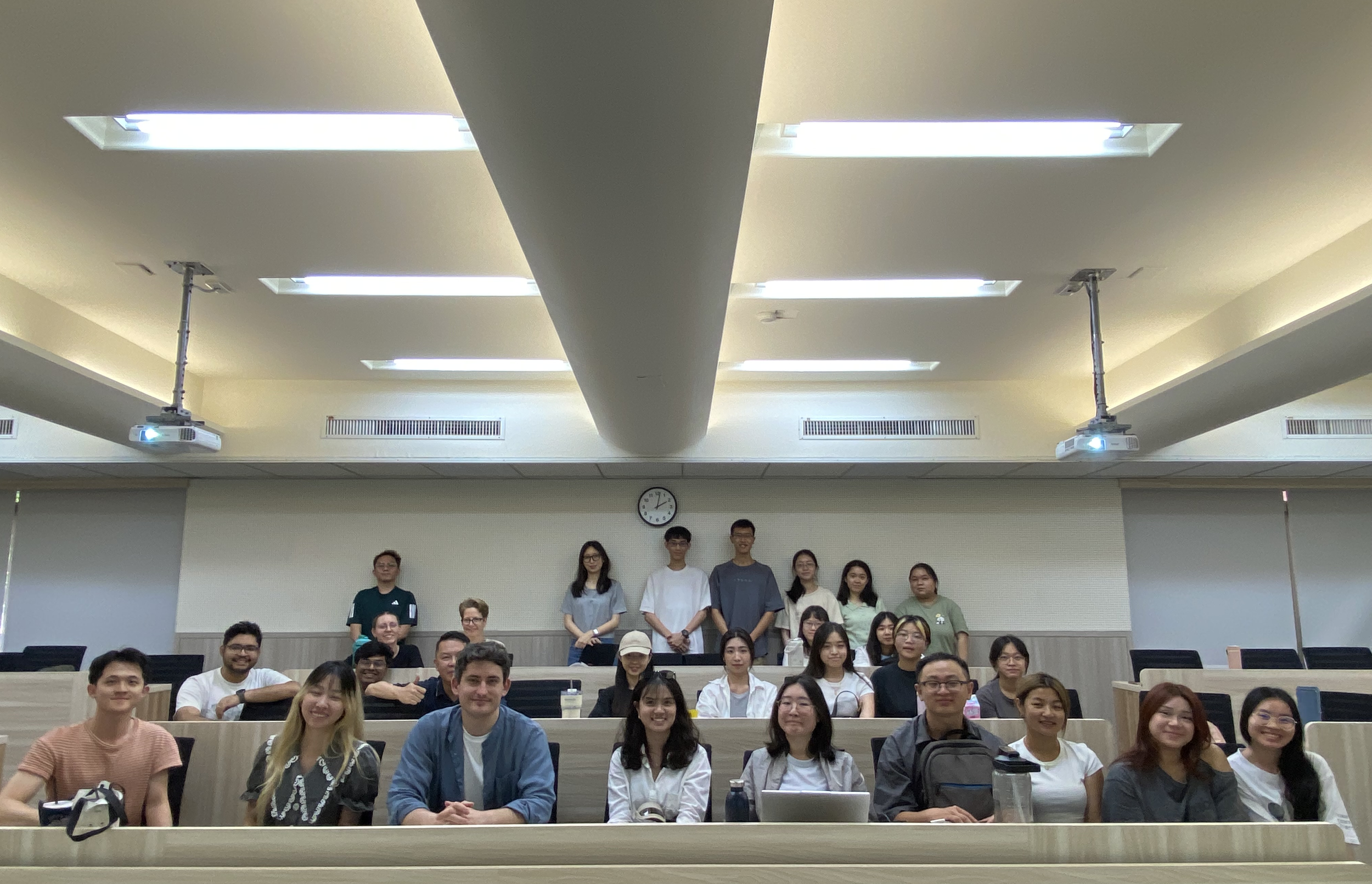
On April 21, students in the GHRM MBA program’s Consulting Methods and Practice class had the opportunity to hear from Dr. Arnaud Cudennec, Assistant Professor of Strategy at Bayes Business School, City St. George’s, University of London. In a course where students act as consultants for a local company and develop AI-driven solutions to HR challenges, his lecture provided practical insights into how text data can support more effective and evidence-based recommendations.
Arnaud began by stating that in today’s environment, competitive advantage is no longer about access to data, but about the ability to analyze and interpret it effectively. He highlighted the increasing value of “reading” text, noting that valuable insights can be found in textual data everywhere, like employee feedback, customer reviews, and internal communications. For example, companies can use data online to understand how their brand is perceived across different customer segments or how people describe their products compared to competitors.
To analyze text at scale, Arnaud introduced natural language processing (NLP), a field of AI that enables computers to interpret and process human language. He explained that NLP can clean unstructured data, convert it into numerical form, and identify patterns across large datasets. Common applications include sentiment analysis, summarization, and clustering, which are all tools especially useful for analyzing feedback and generating actionable insights.
Additionally, he shared examples of machine learning models, such as transformer-based systems like BERT, to demonstrate how organizations can classify and examine large volumes of text. A key advantage of these tools is their ability to scale, allowing large amounts of data to be processed far more quickly than any human could manage. However, Arnaud emphasized that machines cannot fully understand language the same way humans do, often struggling with nuances such as irony, sarcasm, or underlying context. At the same time, he cautioned that this technology has limitations. Using inappropriate training datasets can lead to inaccurate conclusions, as algorithms depend heavily on the quality and relevance of the data they are trained on.
Overall, Arnaud’s lecture demonstrated how text analysis can serve as a powerful approach for both consulting and real-world problem solving. By applying NLP techniques thoughtfully, students can better diagnose issues, uncover meaningful patterns in qualitative data, and develop well-informed, data-driven solutions. At the same time, the session highlighted the importance of recognizing the challenges of AI, reminding students to critically evaluate results and understand when it is necessary to bring in human judgment.